
Nanobodies*
from synthetic nanobody libraries
Meet the next generation multipurpose antibodies
Nanobizz is an expert supplier of selected nanobodies and offers a wide range of nanobody services, which are based on our in-house synthetic nanobody libraries. Our nanobodies are screened, selected and produced completely animal-free and have versatile applications. We can provide nanobodies with different functional groups so that they can be used in the pharmaceutical industry as imaging diagnostics and therapeutics, but also for bioanalysis in the form of ELISAs and immunohistochemistry. Our nanobodies can also have many applications in the food and agricultural industries.
What is a nanobody
A nanobody* (registered trademark of Ablynx NV, Sanofi), also known as a single domain antibody (sdAb) or VHH, is a recombinant, single domain, variable fragment of a common antibody consisting only of the camelid heavy chain and which selectively binds a specific antigen with high affinity. Compared to conventional antibodies, nanobodies have many advantages. Because they are smaller and have a less complex tertiary structure, they are much more resistant to harsh conditions such as high temperatures and strong acids and bases and therefore can be functionalized in a very diverse way. They can be easily genetically engineered and introduced in bacteria and yeast cells to produce the nanobody variant. Nanobodies are therefore rightfullly called the next generation of multifunctional antibodies.
Synthetic Libraries
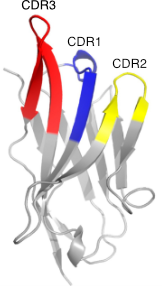
Our synthetic nanobody libraries are based on a well-developed framework of constant regions, and controlled variability is introduced into the CDR regions. This allows us to estimate the expression quality of selected nanobodies with reasonable accuracy and select the most humanized candidates possible for pharmaceutical applications. Moreover, this prevents unwanted surprises during the development process.
Our Services
The services we offer include a number of logically consecutive steps. It starts with the selection of positive clones from our libraries that bind to the target of interest. We do this using phages in a process called panning and selection. We will then express a subset of positive clones in a suitable microbial production host, optionally with some modifications. The final selection of nanobodies can be further characterized to determine the most suitable candidates that meet the predetermined criteria. Depending on the application, we can provide the nanobodies with functional groups, almost anything is possible.
Panning & Selection
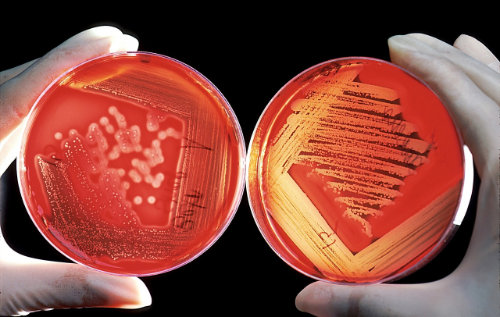
- Access to our synthetic nanobody libraries with randomized CDRs in a generic scaffold
- Production of a nanobody-phage library in E. coli
- Biopanning to enrich for specific target binders using different selection modalities depending on the purpose of use (immobilized antigen, whole cells, tissues)
- DNA sequence analysis of high affinity binders
Cloning & Expression
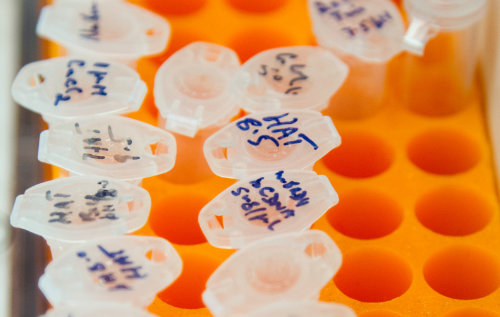
- Construction of expression vectors for nanobody production in bacteria and/or yeast
- Small scale production in E. coli (0.1 – 2 mg) for early characterization
- Medium scale production in P. pastoris (2-25 mg) for further in vitro and in vivo characterization
- Microbial cell bank preparation
- Semi-large scale production (25 mg and more), up to 7 l fermentation
Nanobody
Characterization
- Species specificity and selectivity
- Characterization with ELISA
- FACS analysis
- SPR analysis
- Characterization on cell fragments, whole cells, tissues
- Characterization on HEK293 cells with inducible recombinant antigen expression
Further
Development
- Humanization and liability analysis
- Spacer and linker design
- Conjugation of functional groups (fluorescent or NIR dyes, NOTA/DOTA/DTPA, etc.)
- Multispecific and paratopic nanobodies design
- ELISA assay development
- Affinity chromatography development
Our experts are happy to answer your questions

- Specific company information
- Finding the right solution for you
- Timelines
- Pricing information